 EN
EN
 AR
AR
 BG
BG
 HR
HR
 CS
CS
 DA
DA
 NL
NL
 FI
FI
 FR
FR
 DE
DE
 EL
EL
 IT
IT
 JA
JA
 KO
KO
 NO
NO
 PL
PL
 PT
PT
 RO
RO
 RU
RU
 ES
ES
 SV
SV
 TL
TL
 IW
IW
 ID
ID
 LV
LV
 LT
LT
 SR
SR
 SK
SK
 SL
SL
 VI
VI
 HU
HU
 TH
TH
 TR
TR
 FA
FA
 GA
GA
 CY
CY



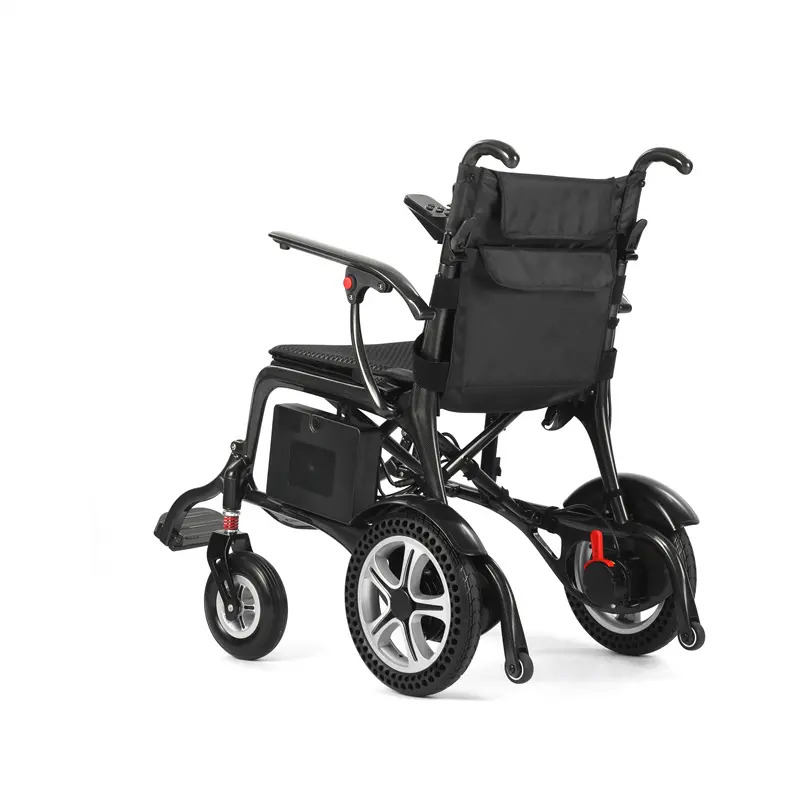
Le facteur le moins pris en compte lors de l'achat d'un fauteuil roulant électrique est la batterie. Pourtant, elle détermine également votre déplacement quotidien, le temps nécessaire pour sa recharge, la fréquence de remplacement de la batterie et même la facilité à voyager en avion. Les deux technologies dominantes sont les batteries au plomb-acide (anciennes, lourdes et peu coûteuses) et les batteries lithium-ion (nouvelles, légères et de haute qualité). Chez Ningbo Baichen Medical Devices Co., Ltd., nous proposons les deux options sur nos fauteuils roulants électriques en aluminium, fibre de carbone, acier et magnésium. Quatre comparaisons majeures vous aident à faire votre choix ci-dessous.
Poids et portabilité
Les batteries au plomb-acide sont lourdes. Une batterie au plomb-acide de 12 V et 35 Ah pèse entre 10 et 12 kg. Le fauteuil roulant électrique comporte deux batteries (système 24 V), ce qui ajoute 20 à 24 kg au poids total, uniquement pour fournir de l'énergie. Ce poids rend difficile le transport du fauteuil dans le coffre d'une voiture ou son ascension des escaliers.
Le poids des batteries lithium-ion est de 60 à 70 % inférieur à celui de batteries plomb-acide de même capacité. Un bloc lithium similaire pèse au total entre 4 et 6 kg. Nos fauteuils roulants électriques en aluminium et fibre de carbone, équipés de batteries lithium-ion, pèsent généralement moins de 18 à 25 kg, contre 35 à 45 kg pour les modèles à batteries plomb-acide. Le lithium-ion s’impose clairement si vous voyagez fréquemment, devez déplacer votre fauteuil ou ne bénéficiez pas de l’aide d’un aidant.
Autonomie et durée de fonctionnement
La capacité des batteries s’exprime en ampères-heures (Ah) ou en watts-heures (Wh). L’effet Peukert affecte les batteries plomb-acide : plus le courant délivré est élevé, plus la capacité utilisable diminue. En pratique, une paire de batteries plomb-acide de 35 Ah peut ne fournir que 25 à 30 Ah en conditions réelles d’utilisation.
Les batteries lithium-ion fournissent presque toute leur capacité nominale, quelle que soit la vitesse de décharge. L’autonomie pratique d’un bloc batterie lithium de 20 Ah équivaut à celle d’un bloc batterie au plomb-acide de 35 Ah. En outre, la tension fournie par les batteries lithium ne diminue pas à mesure qu’elles se déchargent, ce qui fait que votre fauteuil roulant ne ralentit pas. Les batteries lithium offrent une autonomie supérieure aux utilisateurs qui ont besoin d’une autonomie ininterrompue sur plusieurs jours.
Temps de charge et durée de vie
Les batteries au plomb-acide nécessitent généralement entre 6 et 10 heures pour être entièrement chargées et doivent être rechargées après chaque utilisation afin d’éviter la sulfatation (perte irréversible de capacité). Leur durée de vie est de 300 à 500 cycles de charge (environ 1 à 2 ans avec une utilisation quotidienne).
Les batteries lithium-ion peuvent être rechargées en 2 à 4 heures. Elles supportent 1 000 à 2 000 cycles de charge (soit 4 à 8 ans). Bien que le coût initial des batteries lithium soit plus élevé, elles s’avèrent moins coûteuses sur la durée de vie du fauteuil roulant, car elles doivent être remplacées deux fois moins souvent. Les batteries lithium constituent donc un investissement préférable pour les utilisateurs qui utilisent quotidiennement leur fauteuil roulant et qui souhaitent éviter tout temps d’arrêt.
Conformité et sécurité aériennes
C’est ce qui pousse de nombreux voyageurs à renoncer à l’achat. L’utilisation des batteries au plomb-acide (déversables ou étanches) est strictement interdite à bord des avions. La plupart des compagnies aériennes exigent qu’elles soient retirées et transportées comme marchandise dangereuse — une solution peu pratique pour la plupart des utilisateurs.
La plupart des compagnies aériennes autorisent les batteries lithium-ion d’une capacité inférieure à 300 wattheures (Wh) sur les dispositifs de mobilité, mais vous pourriez être tenu de retirer la batterie et de la transporter en cabine. Nos fauteuils roulants électriques équipés de batteries lithium sont fabriqués en fibre de carbone et en aluminium, et disposent de bacs à batteries à démontage rapide afin de garantir leur conformité et leur faisabilité pour les voyages aériens. Le lithium s’impose si vous voyagez fréquemment en avion.
Conclusion
Optez pour des batteries au plomb-acide lorsque : vous n’utilisez le fauteuil qu’à l’intérieur ou à proximité de votre domicile, vous avez quelqu’un pour porter ce poids important, et vous voyagez rarement en avion. Optez pour des batteries lithium-ion lorsque : la portabilité est un critère essentiel pour vous, vous avez besoin d’une autonomie étendue et durable, vous souhaitez une recharge plus rapide, ou vous voyagez en avion.
Nous proposons les deux types de batteries dans toute notre gamme de produits chez Ningbo Baichen Medical Devices Co., Ltd. Notre surface de production dépasse 20 000 m² et comprend 4 lignes d’assemblage, où nous vous aidons à choisir la source d’alimentation la plus adaptée à votre mode de vie. Contactez-nous dès aujourd’hui pour discuter des alternatives aux batteries au plomb-acide et aux batteries lithium pour votre prochain fauteuil roulant électrique.