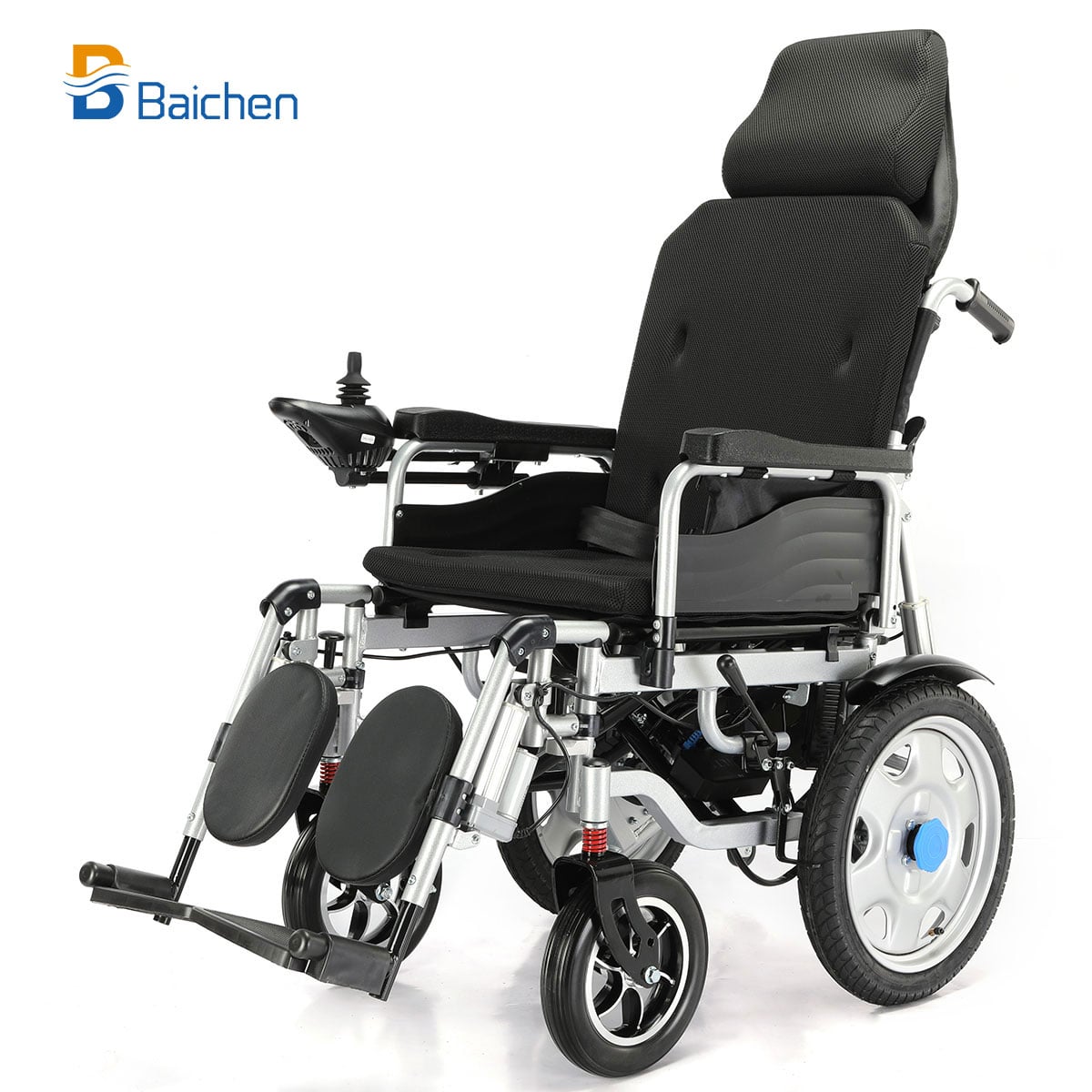
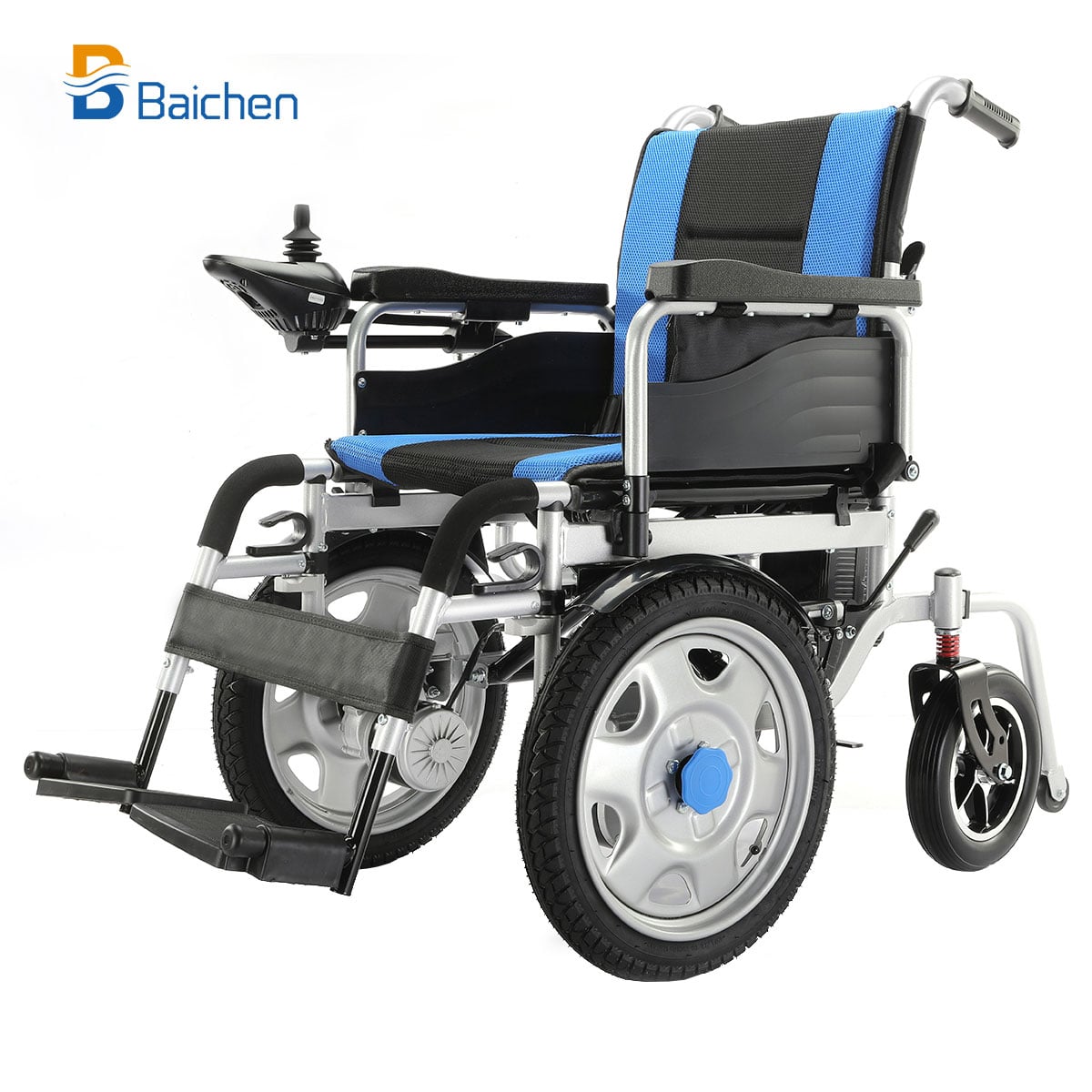
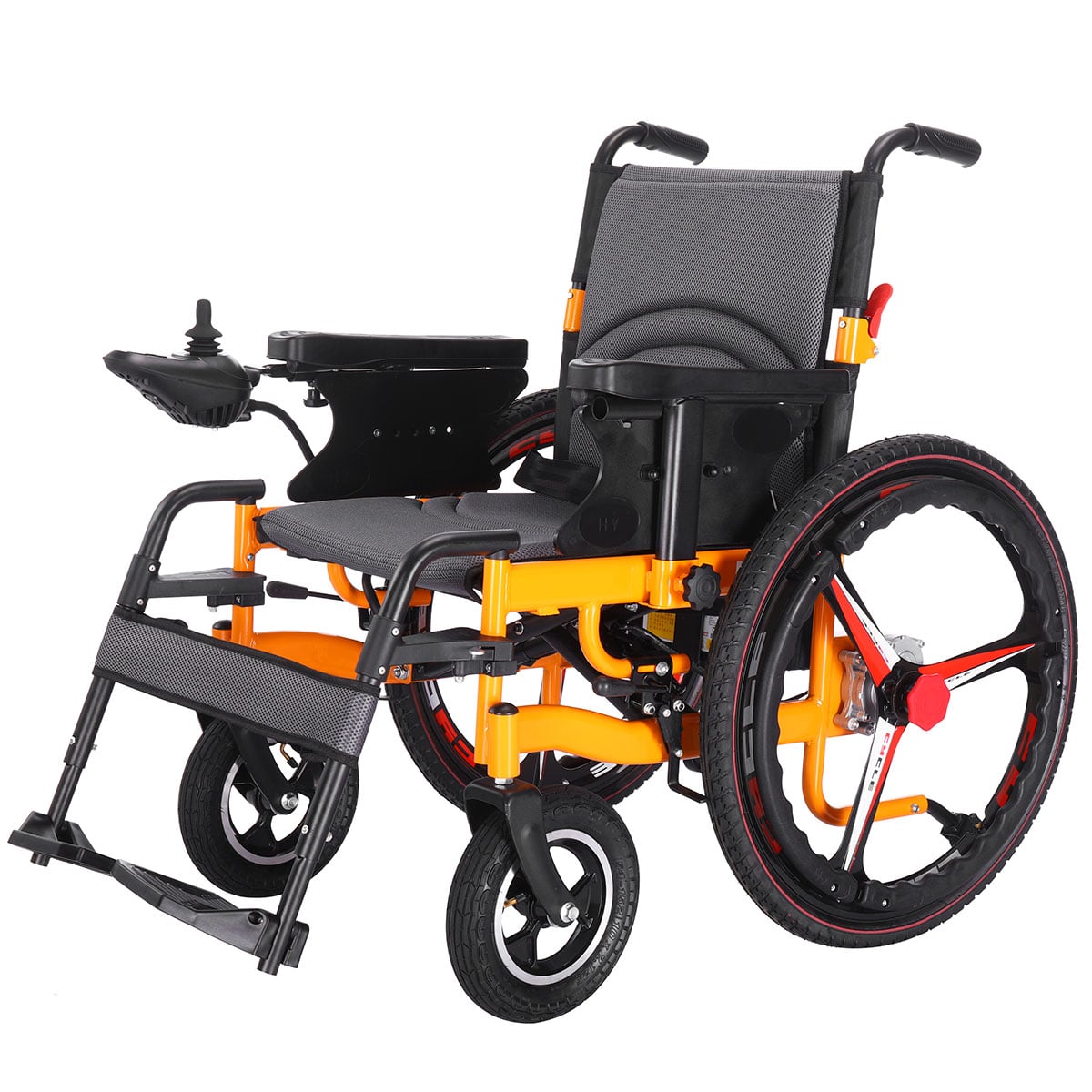
Our usual answer to “what do we inspect?” is to wheel over a finished chair and its carton. Not an empty carton and not a packing photograph—the actual pair. We open it, lift the chair clear, and work out how everything goes home again. That exercise quickly answers the awkward questions. Could cardboard touch the joystick? Is the charger free to wander? Will a warehouse colleague meet the manual before trying to lift the chair by the wrong part?
A package has a strange working life. For a while it belongs to the factory, then to a pallet and forklift, later to a container and loading bay, and eventually to a person with a knife at the customer’s end. Somewhere along that route, a perfectly finished chair can acquire a rubbed frame or a bent control mount. So, in our records, the box is not end-of-line decoration. It is the chair’s first transport system.
Put the order record next to the unit before anybody reaches for tape. Two chairs may look like twins while folded and still occupy the carton differently. Perhaps the control is on the opposite side. Perhaps this SKU has one more accessory, or its charger now lives in the space reserved during the earlier trial.
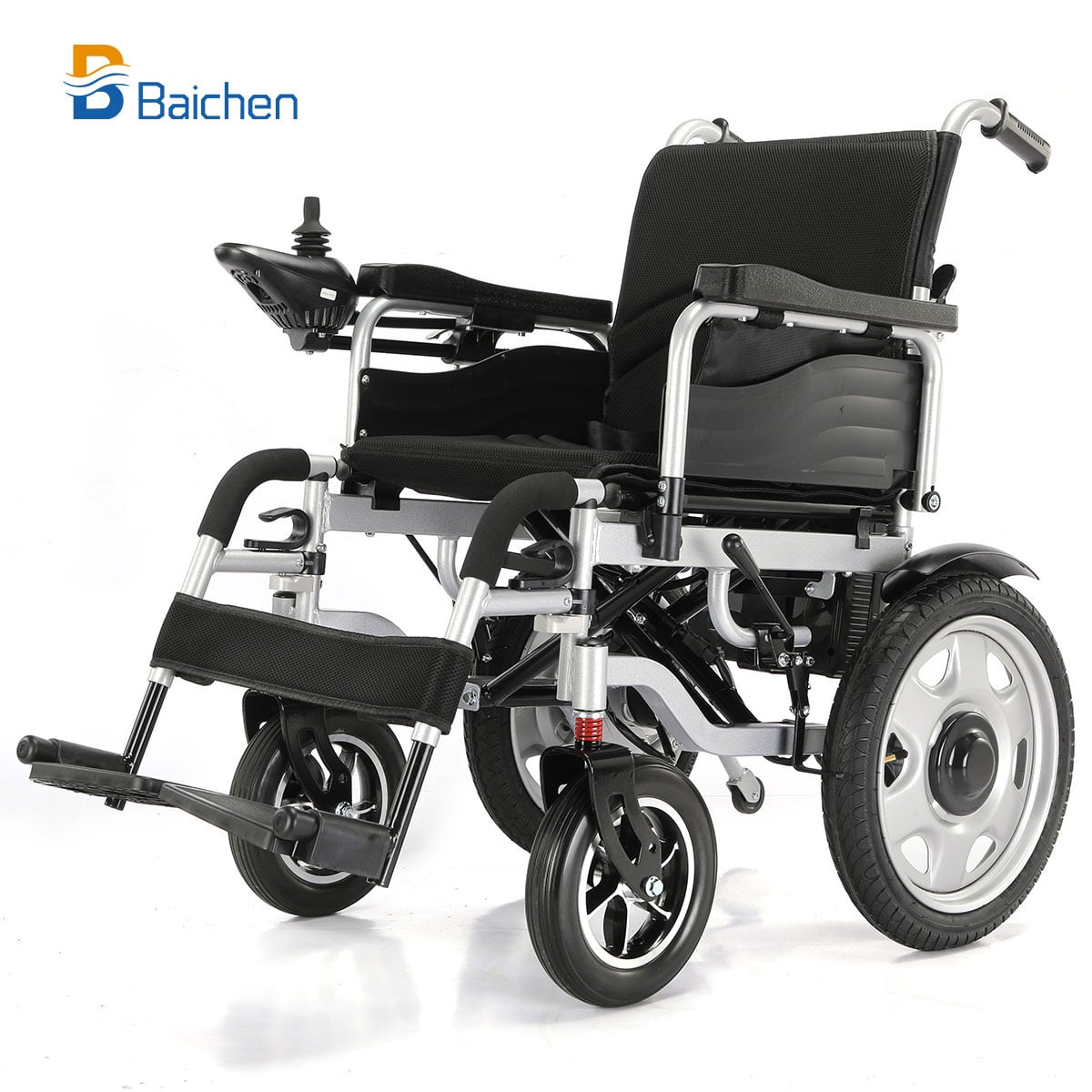
On the sheet, name the factory model and buyer SKU, colour, battery, charger, control arrangement and the included options. Take one clear picture of the identity label and another looking down at the packed chair. If the order mixes configurations, number the references rather than calling them all “standard”. Buyers may use the Baichen electric wheelchair catalogue to explore the families. For packing approval, though, the quoted unit in front of us has the final word. A foam set that fits one family member has not earned permission to fit them all.

Begin the electric wheelchair packaging inspection with movement. Then pressure. Then rubbing. We trace the folded frame by hand because fingers notice a tight gap that a quick photograph can hide. Footrest, armrests, anti-tip parts, wheel rims, controller, cables, battery area, upholstery—each gets a turn. The thin outer bag is useful against dust, but nobody should mistake it for protection between hard surfaces.
Signs of trouble are often modest. Foam has compressed on one corner. A bag is torn at exactly the same place twice. A shiny line has appeared on painted metal. The controller bracket is closer to the carton wall than anyone remembered. Those clues belong in the electric wheelchair packaging inspection record, preferably with a close photograph. We are not awarding points for the largest amount of foam. The successful pack keeps this chair still and lets an ordinary receiver understand it.
Any part removed for shipping needs a home. Where does it sit? What protects it? How will the dealer recognise it? Chargers, tools and small accessories should not be loose enough to visit the upholstery or electrical parts during transport. “It is somewhere in the box” is a poor receiving instruction and an even worse first impression.
Choose a colleague who did not pack the chair. Hand over the proposed opening instructions and watch quietly. Where does the knife go? What gets lifted first? Is the manual visible, or does the person begin pulling at the folded chair? If the box is turned upside down or the joystick becomes a handle, the packing has taught the wrong sequence.
A small “open here” cue can do more work than another page of explanation. Tape or strapping should never make the receiver cut towards upholstery or a cable. Put quick-start information where it is encountered early. If a little assembly is needed, the correct pieces and their order ought to be obvious. Five minutes with a first-time opener gives the electric wheelchair packaging inspection a human reality that a sealed-carton photograph cannot provide.
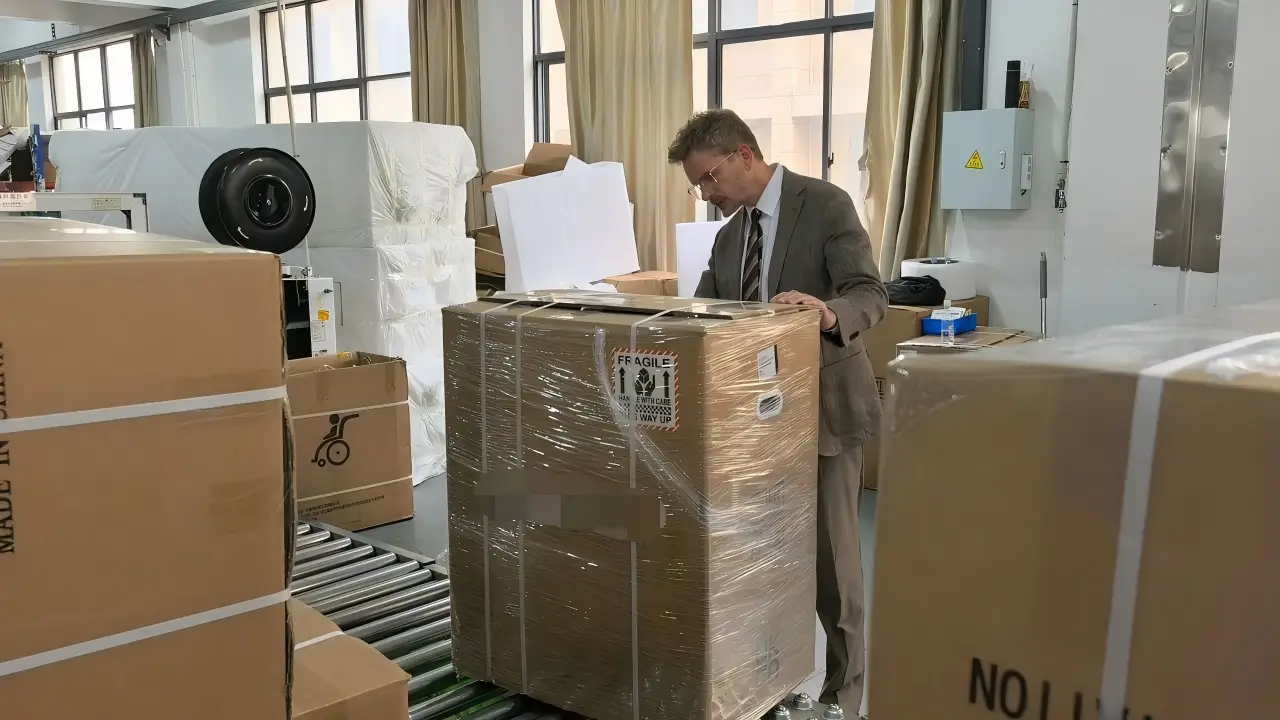
After the agreed handling or transport exercise, we unpack the same carton once more. Scratches and marks get the first look; the functional points come next. Fold, open and lock the chair. Follow the control cable with your eyes. Check the battery connection, roll the wheels and lay out the accessories. Finally, power up and perform the low-speed movement and braking routine already named in the inspection plan.
One good carton is encouraging; it is not proof against every journey. A new chair or a meaningful configuration change may call for a more formal package test. For routine lots, buyer and supplier should decide the sampling rule and pass/fail method before shipping day. When something is damaged, record the story in order. Start with every outer face and the shipping label. Continue with internal protection and the likely contact point. Finish on the chair’s identity and the damaged part. That order gives us a much better chance of telling packing failure from carrier damage or unusual handling.
Do we approve packaging before the product sample?
Approve the chair’s configuration first, then approve a fully packed example of that same configuration. If the controller, battery, chair or accessory set changes later, go back to the affected part of the packing review.
There is no useful universal answer. Chair, carton, route and buyer requirement all influence the method. Qualified parties should settle the protocol and the pass/fail points. Choosing a dramatic drop height in the middle of an informal meeting merely creates a number; it does not create a defensible test.
Start wide: every carton side and the shipping label. Photograph the damaged place before opening, then the supports, packed position and identity label. Finish with close views of the product damage. Sequence matters because unpacking changes the evidence.
The route is part of the brief. When you write to us, describe the journey, the receiving warehouse and the dealer’s final delivery method. With that context, Baichen can look at the selected model, packing expectations and electric wheelchair packaging inspection before production begins. Our electric wheelchair products page is a convenient starting point; the actual route and project notes can follow through the contact page.
 EN
EN
 AR
AR
 BG
BG
 HR
HR
 CS
CS
 DA
DA
 NL
NL
 FI
FI
 FR
FR
 DE
DE
 EL
EL
 IT
IT
 JA
JA
 KO
KO
 NO
NO
 PL
PL
 PT
PT
 RO
RO
 RU
RU
 ES
ES
 SV
SV
 TL
TL
 IW
IW
 ID
ID
 LV
LV
 LT
LT
 SR
SR
 SK
SK
 SL
SL
 VI
VI
 HU
HU
 TH
TH
 TR
TR
 FA
FA
 GA
GA
 CY
CY