Your customer may need a scooter that turns easily in a small apartment, fits beside a dining table and moves through shop aisles. Another of your customers may spend most of the day outdoors on wider paths and care more about a planted, reassuring ride. Asking which scooter is better without describing that life is unlikely to produce a helpful answer.
At Baichen, we make both three-wheel mobility scooters and four-wheel mobility scooters. Our first step is to listen to the route, the rider and the person who may need to transport the scooter. That conversation turns a three wheel vs four wheel mobility scooter comparison into a recommendation your dealer can explain honestly.
Our quick answer
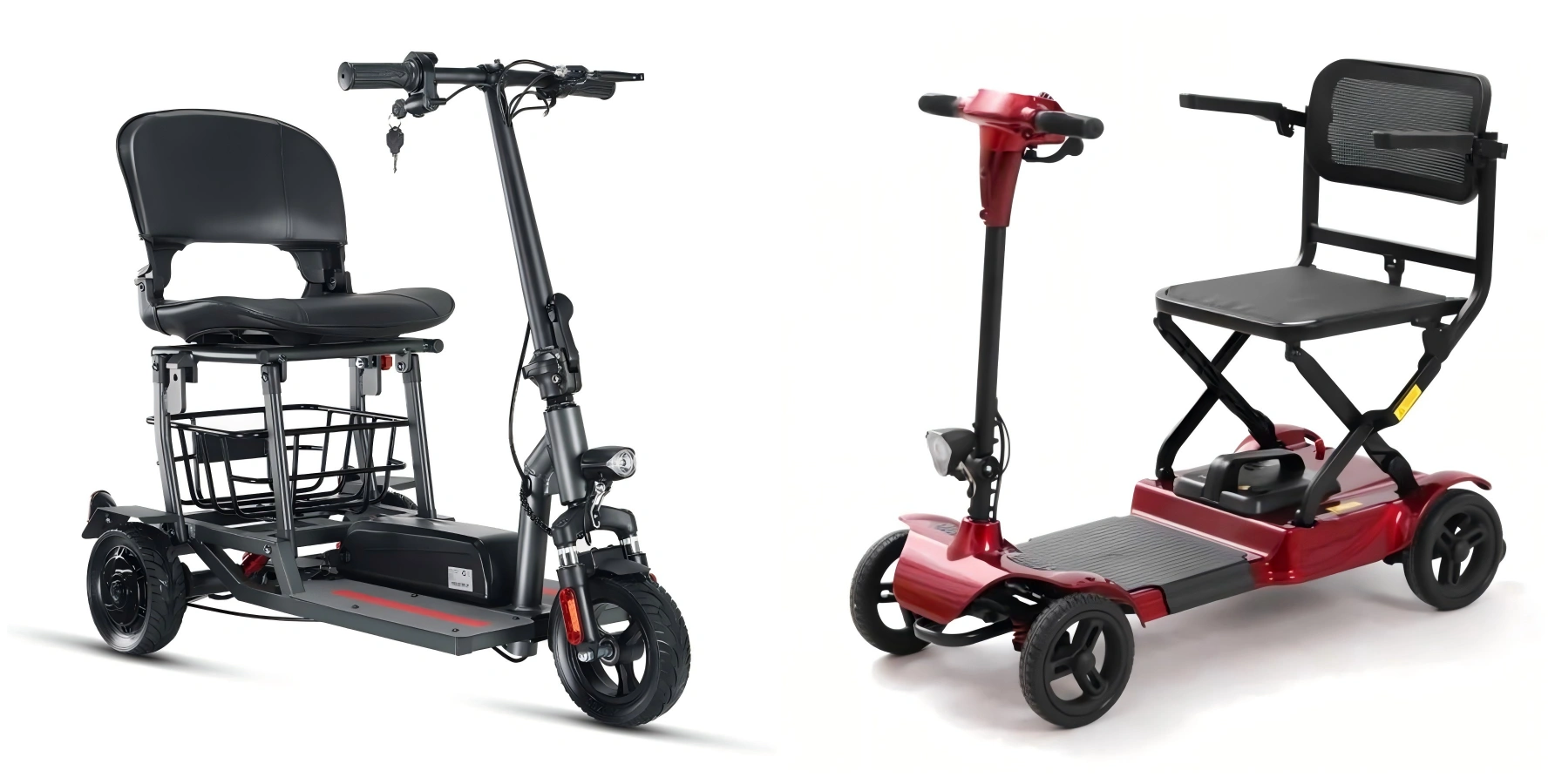
Three wheels often help when turning space and open foot room matter most. Four wheels often give riders more confidence on mixed outdoor routes, although every scooter must be judged as a complete design. Tell us about doorways, side slopes, pavement, storage, vehicle loading and rider comfort. We can help narrow the options and plan a test instead of relying on a wheel-count slogan.
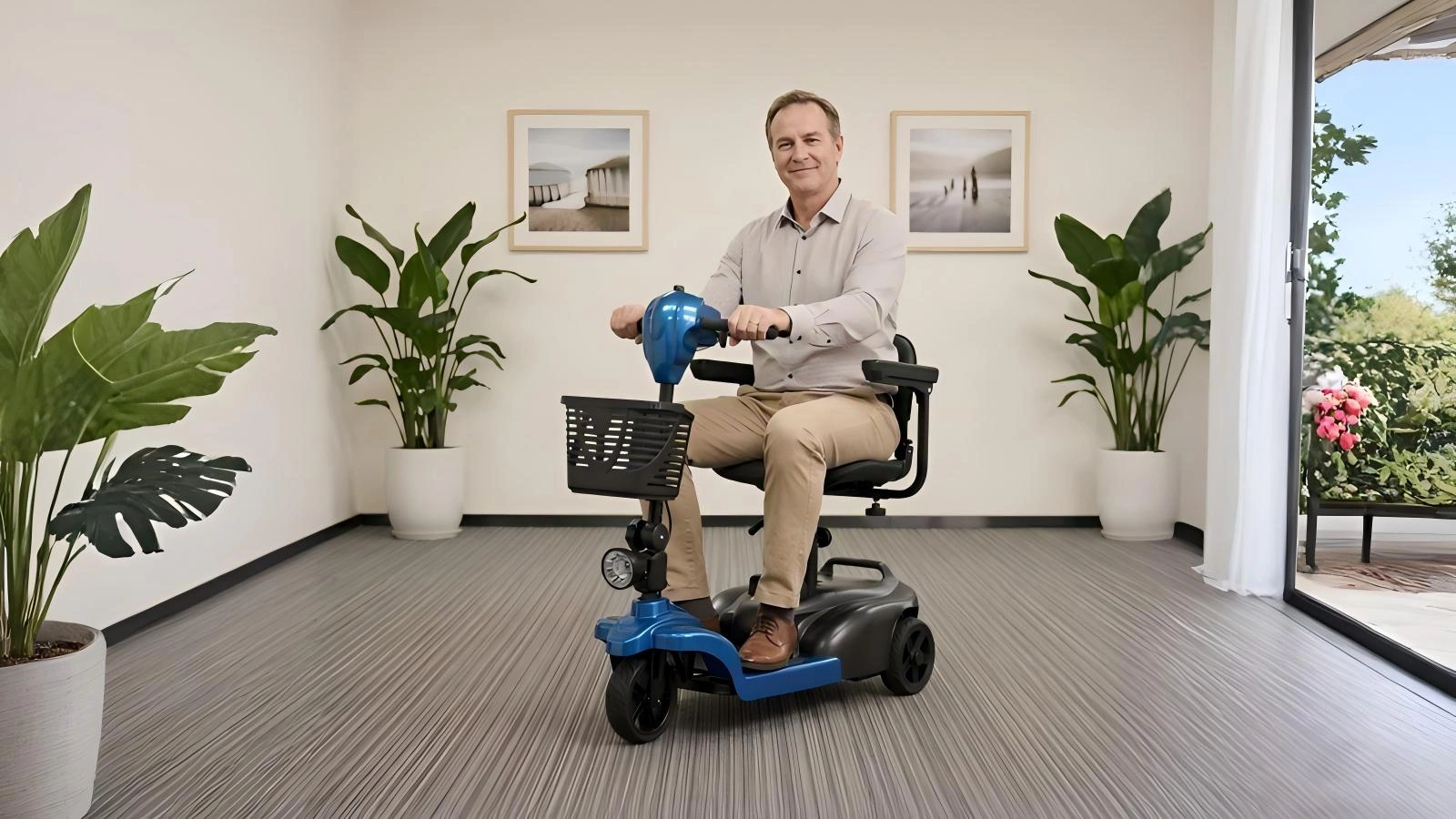
A three-wheel layout commonly provides a tighter turning path and more open space around the user's feet. It can work well in shops, apartment corridors and other places where maneuverability matters. The steering feel is familiar to many users, and a compact front end can make transfers or leg positioning easier in some designs.
The trade-off is the support geometry. A three-wheel scooter can be less tolerant of side slopes, abrupt turns or uneven surfaces than an otherwise comparable four-wheel design. The real result depends on the complete vehicle, including track width, wheelbase, center of mass, seat position, speed control and user behavior. It is inaccurate to call every three-wheel scooter unsafe or every four-wheel scooter stable.
For a distributor, the correct sales message is specific: choose a three-wheel product when tight maneuvering and access are primary, and verify how it performs on the surfaces customers actually use. Dealer training should cover speed reduction before turns, side-slope caution, obstacle approach and correct seating.
When evaluating a three-wheel mobility scooter, measure overall width and turning behavior with a rider, not only on an empty showroom floor. Check access to the seat, foot placement, tiller adjustment and visibility of controls. If a model is intended for transport, test the complete folding or disassembly process with the person who will handle it.

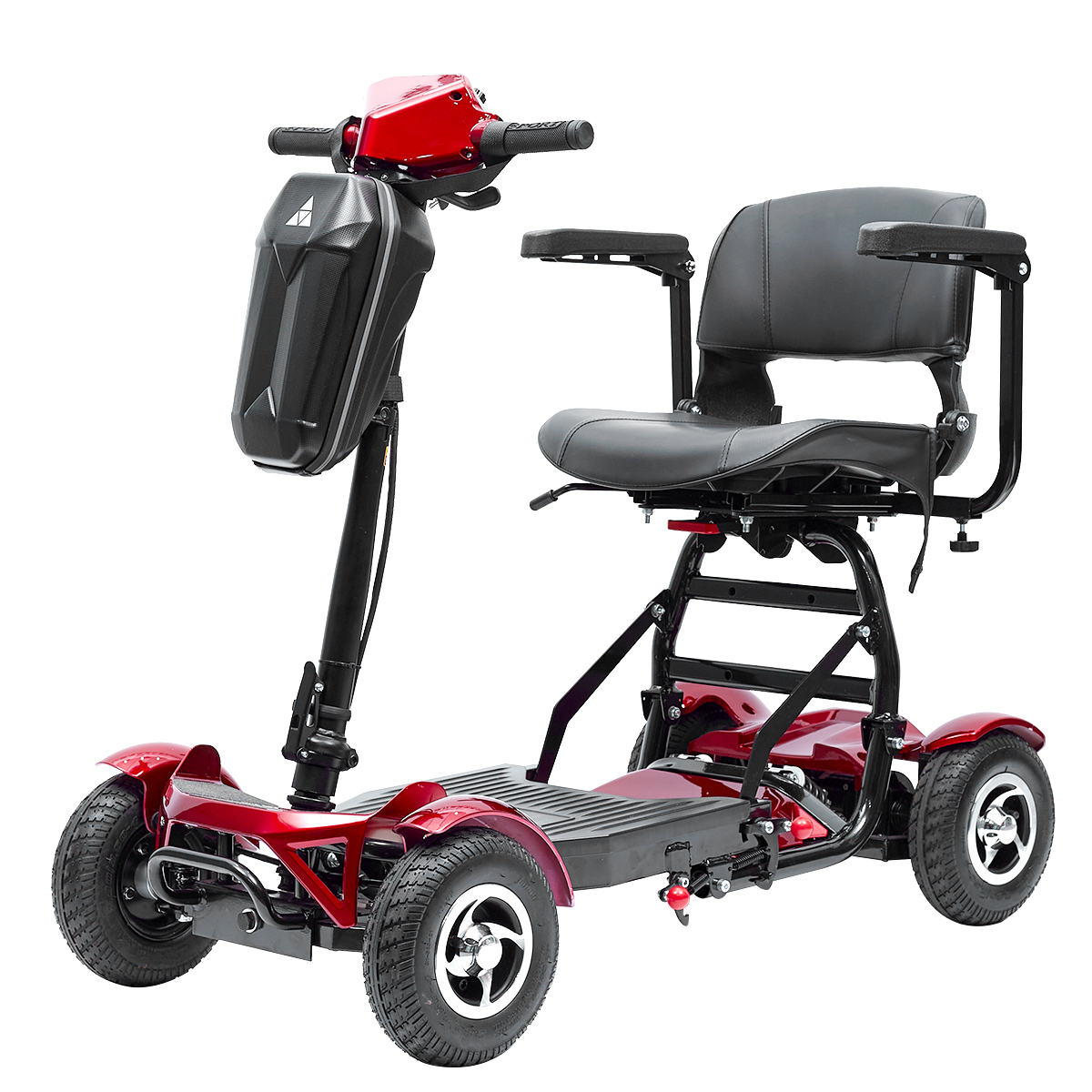
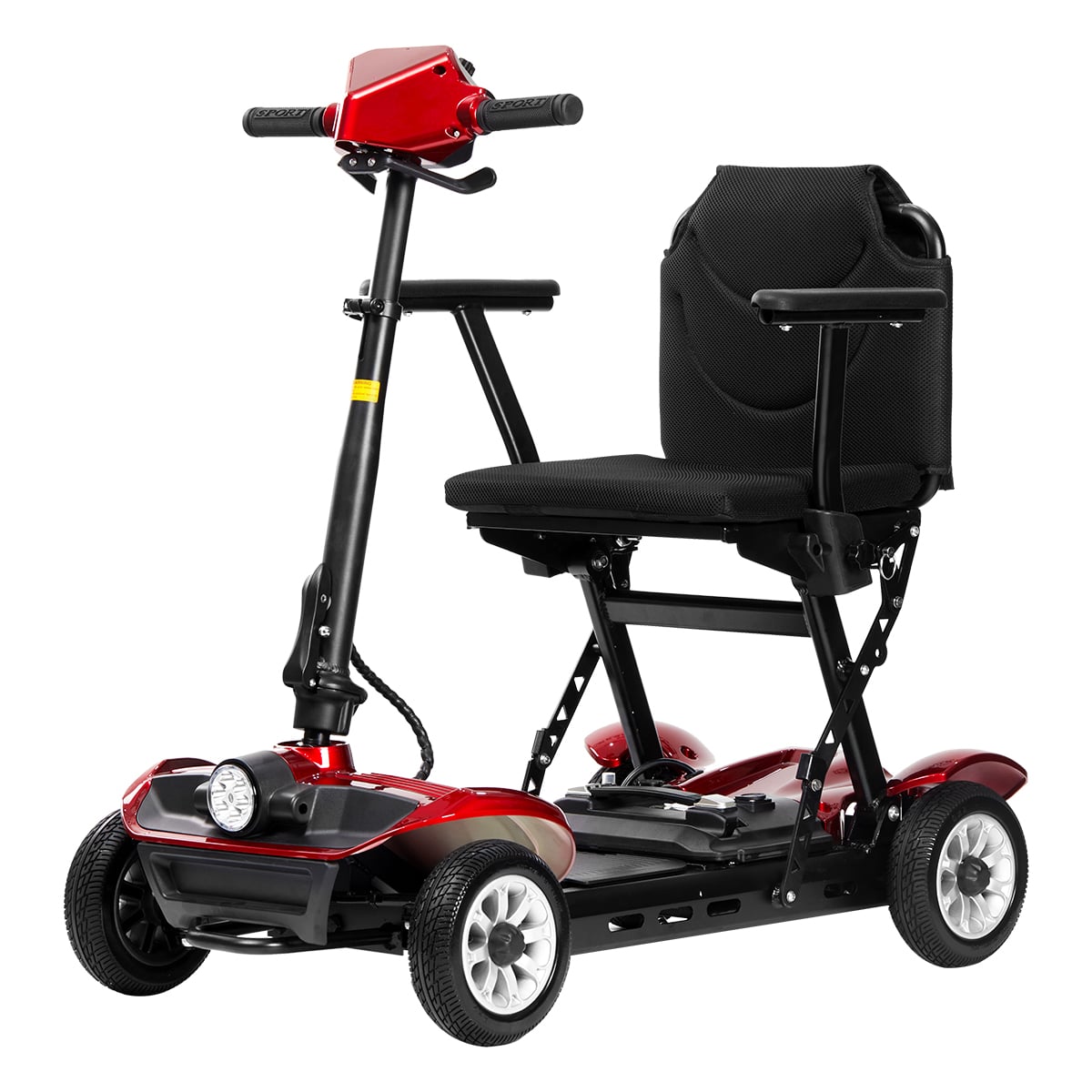
Four-wheel scooters are often chosen for a more planted feel and greater confidence in mixed outdoor use. A four-point footprint can support stable straight-line travel, but the design may require more turning space and may feel less agile indoors. Again, the full geometry matters more than the label.
A balanced four-wheel model can serve as the center of a distributor's range. It may suit users who travel through neighborhoods, shopping areas and retirement communities and who need both everyday control and outdoor reassurance. Larger products can extend this position toward comfort and terrain capability, while compact four-wheel products can move closer to the travel segment.
When comparing four-wheel mobility scooters, test more than top speed and claimed range. Review turning clearance, low-speed control, braking response, curb or obstacle approach, ground clearance, suspension behavior, seat access, tiller position and visibility. A scooter that looks stable can still be awkward in a small home, while a compact model may not provide the comfort a daily outdoor user expects.
Your dealer should be able to explain the trade-off in one sentence: more stability-oriented geometry usually asks for more space.
Specifications matter when they are connected to real use. A range table should therefore explain what a number changes for the rider, caregiver, retailer and service team.
Product and lift weight
Clarify whether published weight includes the battery, seat, basket and accessories. If parts can be removed, list the heaviest remaining lift. Test whether the folded unit has useful handholds and whether it can be rolled when folded. For online sales, avoid using "lightweight" without an actual, consistently defined measurement.
Overall and folded dimensions
Overall width affects doorway and aisle access. Length and turning geometry affect indoor maneuvering. Folded dimensions affect storage and transport, but the shape of the folded scooter can matter as much as its volume. A tall narrow fold may suit one home and be inconvenient in another.
User capacity and seating
User capacity is a design limit, not a comfort guarantee. Seat width, depth, back support, armrest spacing, floor space and tiller reach must suit the intended user. We encourage distributors to not recommend a scooter at the upper limit without confirming fit and stability.
Speed and control
Maximum speed attracts attention, but low-speed smoothness often determines whether a user feels confident in shops or crowded areas. Evaluate acceleration, deceleration, turning response and braking. Controls should remain readable in common light conditions and understandable to the target customer.
Ground clearance, tires and suspension
These features influence how the scooter handles surface transitions, broken pavement and vibration. They also affect height, weight, maintenance and turning behavior. Avoid calling a product "all terrain" unless the intended surfaces and limitations are clearly defined.
Battery and driving distance
Published range is influenced by user mass, speed, terrain, temperature, tire condition, battery condition and driving pattern. Train dealers to present range as a tested condition, not a promise for every user. Record battery chemistry, energy rating, charging method, storage guidance and replacement identification.
Is a four-wheel mobility scooter always more stable?
Four-wheel geometry can provide a more planted feel, but stability depends on track width, wheelbase, center of mass, seat position, speed, surface and rider behavior. Test the complete model.
Which layout turns more tightly indoors?
A three-wheel layout often turns more tightly, although the actual turning path depends on the scooter's complete dimensions and steering geometry.
How should dealers explain three wheel vs four wheel mobility scooter choices?
Ask about route, turning space, side slopes, transport, storage, comfort and control. Demonstrate both when needs overlap and explain the limits of each model.
If the choice still feels close, describe one normal day for the intended user. Include the narrowest doorway, the usual surface, any slope, the available storage space and the person who will load the scooter. Our team can use that picture to compare relevant models from the complete mobility scooter range. Send the details through our contact page, and we will help you turn technical differences into a clear customer recommendation.
 EN
 AR
 BG
 HR
 CS
 DA
 NL
 FI
 FR
 DE
 EL
 IT
 JA
 KO
 NO
 PL
 PT
 RO
 RU
 ES
 SV
 TL
 IW
 ID
 LV
 LT
 SR
 SK
 SL
 VI
 HU
 TH
 TR
 FA
 GA
 CY